Marburg virus quarantine at Nairobi Hospital
The Hot ZoneMarburg virus quarantine at Nairobi Hospital was an emergency response to the discovery of Marburg virus in Shem Musoke’s blood. David Silverstein, Musoke’s physician, persuaded Kenyan health authorities to close the hospital and isolate people who might have encountered either Musoke or Charles Monet. The response briefly halted the hospital’s work and placed much of its medical staff under quarantine while the risk of infection remained uncertain.
Discovery and decision
Silverstein had been caring for Musoke with supportive treatment, trying to maintain his nutrition and reduce his fevers without a clear treatment plan. At two o’clock one morning, an American researcher stationed in Kenya telephoned to report that South African investigators had found Marburg virus in Musoke’s blood. Silverstein had not heard of the virus before. Unable to sleep, he went to the hospital before dawn, found a medical textbook, and read its brief account of the 1967 outbreak associated with Behring Works in Germany.
Learning what Marburg could do to people changed the problem from an individual patient’s illness into a possible hospital-wide exposure. Silverstein persuaded the Kenyan authorities to shut Nairobi Hospital. The decision was precautionary: staff and patients had to be considered at risk because the virus had been identified in a patient being treated there, and the extent of possible contact was not yet clear.
Closure and quarantine
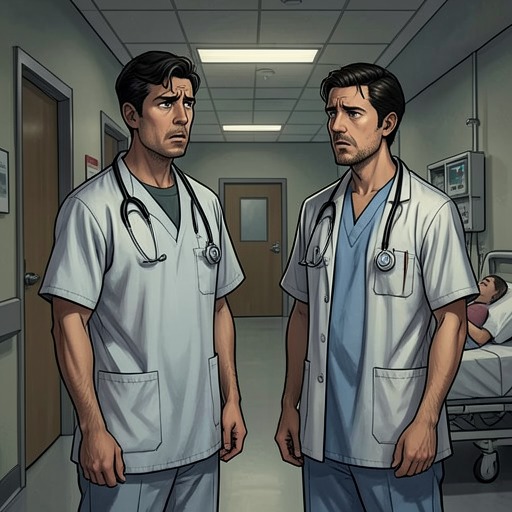
For a week, people arriving at the hospital were turned away. Sixty-seven people, most of them medical staff, were quarantined inside for two weeks. The group included the doctor who had performed Monet’s autopsy; nurses who had attended Monet or Musoke; surgeons who had operated on Musoke; and aides and technicians who had handled secretions from either patient. Many staff members had direct contact with one of the men or with blood and other fluids taken from them.
The surgeons’ own recollection of having worked in close contact with Musoke’s blood sharpened the uncertainty of the wait. Quarantine did not establish that these people were infected; it separated those with possible exposure while they waited to learn whether illness would follow. The scale of the response reflected how much of a hospital’s ordinary work depends on contact among patients, clinicians, and diagnostic staff.
Musoke’s recovery and the outcome
About ten days after Musoke fell ill, his condition began to improve. He became disoriented and angry and refused medicine; later, his fever subsided, his eyes cleared, and his mind and personality returned. He recovered slowly but completely and went on to practice at Nairobi Hospital as part of Silverstein’s group. His recovery did not erase the danger perceived during the quarantine, but it gave the episode an outcome other than the fatal course feared by those caring for him.
No other person at the hospital developed a proven case of Marburg virus disease. The quarantine therefore ended without a confirmed secondary case, while the week-long closure had temporarily put the hospital out of operation. In the narrative, the episode is a microbreak: an isolated emergence whose potential for wider transmission was unknown at the time. Its significance lies in the gap between what could be confirmed afterward and what staff had to assume while the virus’s reach remained uncertain.